
The 2026 Digital Transformation: 15 Essential Marketing Tools to Scale Your Enterprise
In the current fiscal landscape, the “digital-first” approach has shifted from a competitive advantage to a foundational requirement for corporate survival. We are operating in an era where the boundary between the physical and digital storefront has effectively dissolved. With over 5.3 billion global internet users spending an average of 6.5 hours online daily, the digital ecosystem is no longer just a channel—it is the primary theater of commerce.
For the modern executive, digital marketing represents more than just “online ads.” It is a sophisticated data-driven engine designed to enhance brand equity, compress the sales cycle, and foster long-term institutional loyalty. However, as the complexity of the digital landscape increases, so does the necessity for a streamlined, high-performance “MarTech” (Marketing Technology) stack.
This guide provides a strategic analysis of the 15 categories of digital tools essential for scaling your operations, driving market penetration, and maintaining a professional edge in 2026.
Part I: The Strategic Value of Digital Marketing
Before deploying capital into new software, it is vital to understand the four pillars of value that digital marketing provides to the modern organization:
1. Global Scalability at Lower Marginal Costs
Traditional media—print, broadcast, and OOH (Out-of-Home)—carry significant overhead and geographical limitations. Digital channels allow for a “borderless” expansion, enabling a mid-market firm to compete with global multinationals by leveraging targeted reach and algorithmic precision.
2. High-Fidelity Data and Measurability
Unlike “old school” marketing, digital platforms provide real-time attribution. Every dollar spent can be tracked through the funnel, from the initial impression to the final conversion. This transparency allows for agile pivoting, ensuring that marketing budgets are optimized for the highest possible Return on Ad Spend (ROAS).
3. Hyper-Granular Targeting
The power of modern advertising lies in its ability to bypass the “noise” and speak directly to a specific demographic. Through behavioral mapping and AI-driven segmentation, your message reaches only those with the highest intent to purchase, significantly reducing “ad waste.”
4. Sustained Customer Lifecycle Management
Digital tools move beyond the transaction. Through integrated CRM and social engagement platforms, a business can maintain a continuous dialogue with its clientele, transforming one-time buyers into brand advocates and increasing the Lifetime Value (LTV) of every customer.
“Get Djobzy” <Get Things Done>
Whoever you are, whatever you do, Djobzy Can optimize it for you#WorkFromHome #Technology #AI #startup #crypto #work #success #Launchpad pic.twitter.com/66007cueoN— Djobzy.com (@Djobzycom) December 20, 2024
Part II: The 15 Essential Pillars of Your Marketing Stack
When selecting your toolset, prioritize scalability, integration capability, and user experience (UX). Below are our expert recommendations for 2026.
1. Core Web Infrastructure: Wix vs. Squarespace
Your website is your digital headquarters. In 2026, a website must be more than a brochure; it must be an interactive experience.
-
-
Wix: Ideal for organizations requiring deep customization and robust integrated app markets. Its AI-driven design tools have made it a favorite for rapid deployment without sacrificing professional polish.
-
-
-
Squarespace: The gold standard for design-led brands. Squarespace offers unmatched aesthetic templates that provide a “high-end” corporate feel with minimal maintenance.
-
Strategy Tip: Prioritize mobile-first indexing, as over 60% of B2B research is now conducted via mobile devices.
-
2. Social Media Orchestration: Hootsuite vs. Buffer
Managing a multi-platform presence requires centralized command.
-
-
Hootsuite: An enterprise-grade solution that excels in social listening and complex team workflows. It is the preferred choice for organizations managing global brands across 10+ channels.
-
Buffer: Focuses on streamlined scheduling and clean analytics. It is highly effective for lean teams that prioritize speed and clarity over deep-dive listening data.
-

3. Lifecycle Email Marketing: Mailchimp vs. Constant Contact
Email remains the highest-ROI channel in digital marketing, returning an average of $36 for every $1 spent.
-
Mailchimp: Now a full-scale marketing platform, Mailchimp’s advanced automation and “Customer Journey Builder” allow for sophisticated lead nurturing.
-
Constant Contact: Known for its world-class deliverability and robust event management features, making it ideal for service-based firms and non-profits.
4. Visual Identity & Brand Assets: Canva vs. Piktochart
In a visual-first economy, the speed of content production is a critical KPI.
-
Canva: The undisputed leader in democratizing design. For corporate teams, Canva for Teams provides brand kits and approval workflows that ensure visual consistency across all departments.
-
Piktochart: Specifically geared toward data visualization. If your firm frequently produces white papers or reports, Piktochart’s infographic focus is superior for turning complex data into digestible narratives.
@djobzy.com Sign up Now #hiring #business #job #sidehustle #promote #website #problemsolved ♬ original sound – Djobzy.com
5. Content Integrity & Clarity: Grammarly vs. Hemingway
Professionalism is defined by precision. Errors in copy erode trust and brand authority.
-
-
Grammarly: Beyond basic spellcheck, Grammarly’s 2026 AI identifies tone inconsistencies, ensuring your team’s communication remains “confident” and “professional.”
-
Hemingway Editor: A tool for structural clarity. It identifies “purple prose” and complex sentences, forcing your writers to communicate with the brevity required for the C-suite.
-
6. Search Engine Optimization (SEO): Yoast vs. Ahrefs
Organic search is the long-term equity of your business.
-
-
Yoast SEO: The essential plugin for WordPress users. It handles the technical “under-the-hood” SEO, ensuring your content is readable by both humans and search algorithms.
-
Ahrefs: A powerhouse for competitive intelligence. Ahrefs allows you to see exactly what your competitors are ranking for, enabling you to “gap fill” your content strategy and claim market share.
-

7. Data Intelligence: Google Analytics 4 (GA4)
If you cannot measure it, you cannot manage it.
-
-
Google Analytics: The industry standard for tracking user behavior. In 2026, GA4’s predictive analytics can help you forecast future sales trends based on current traffic patterns.
-
Action Item: Ensure your GA4 is properly “event-tracked” to monitor specific conversions like form fills or PDF downloads.
-
8. Agile Project Management: Trello vs. Asana
Marketing is a discipline of deadlines. Without a centralized “source of truth,” campaigns suffer from friction and delay.
-
-
Trello: Uses a Kanban-style visual board. It is excellent for creative brainstorming and managing the “flow” of content production.
-
Asana: A more robust, multi-view platform suited for complex, cross-departmental product launches. Asana’s “Workload” feature ensures your team is optimized without being burnt out.
-
9. Market Research & Feedback: SurveyMonkey vs. Typeform
Data-backed decisions are the hallmark of a mature business.
-
SurveyMonkey: Best for deep-dive market research and longitudinal studies. Its analytical backend is designed for professional researchers.
-
Typeform: Focuses on the user experience. By making forms conversational and visually stunning, Typeform significantly increases completion rates for lead generation.
10. High-Resolution Visual Resources: Unsplash vs. Pexels
Never compromise on image quality. Low-resolution or “stocky” imagery signals a lack of professional investment.
-
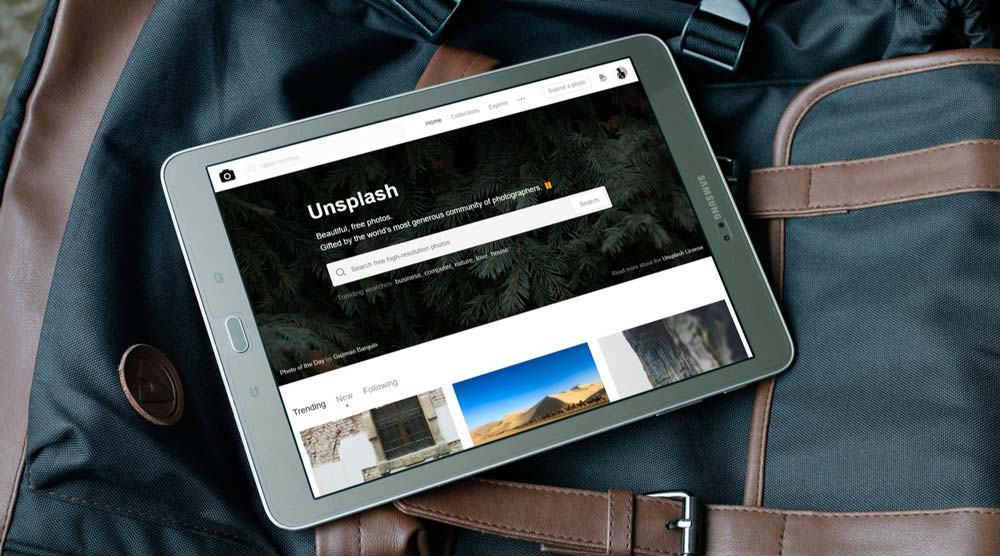
Unsplash: Known for artistic, high-concept photography that feels authentic and modern.
-
Pexels: Offers a wide variety of both photos and high-quality stock video, which is essential for the 2026 pivot toward short-form video content.
11. Paid Media Acquisition: Google Ads vs. Meta Ads
Paid search and social are the “fast-track” to visibility.
-
Google Ads: Captures “high-intent” users—people actively looking for a solution. It is the most effective tool for B2B and service-oriented lead generation.
-
Meta Ads (Facebook/Instagram): Excels at “demand generation.” Through visual storytelling and demographic targeting, you can introduce your product to people who didn’t know they needed it yet.
12. Automated Nurture Sequences: ActiveCampaign vs. Mailchimp
Automation is the “force multiplier” of your sales team.
-
ActiveCampaign: A leader in “Marketing Automation.” It triggers emails, SMS, and CRM updates based on specific user actions, ensuring no lead falls through the cracks.
-
Mailchimp: For smaller firms, Mailchimp’s automation suite provides a lower barrier to entry while still offering robust “if/then” logic for customer paths.
13. Customer Relationship Management (CRM): HubSpot vs. Zoho
A CRM is the “brain” of your company’s sales and marketing data.
-
HubSpot: The gold standard for inbound marketing. Its seamless integration between marketing, sales, and service makes it the ultimate platform for companies looking to scale beyond $10M in revenue.
-
Zoho CRM: A highly cost-effective, modular solution. Zoho is famous for its customization options, allowing businesses to build a CRM that fits their unique internal processes.
14. Virtual Presence & Collaboration: Zoom vs. Google Meet
In a hybrid world, your video conferencing setup is your boardroom.
-
-
Zoom: Offers superior stability for large-scale webinars and external client presentations. Its “Breakout Room” and “Recording” features are essential for corporate training.
-
Google Meet: Seamlessly integrated into the Google Workspace. It is the most efficient tool for internal “quick syncs” and collaborative document sharing.
-
15. Brand Sentiment & Reputation: Brand24 vs. Sprout Social
Your brand is what people say about you when you aren’t in the room.
-
-
Brand24: A specialized tool that monitors the entire web for mentions of your company, providing a “Sentiment Analysis” so you can address PR issues before they escalate.
-
Sprout Social: Combines management with deep reputation monitoring. It allows your customer service team to respond to social inquiries with the speed that modern consumers expect.
-
Part III: Implementation and Scalability
Adopting these tools is not an “all-or-nothing” proposition. A strategic implementation should follow a tiered approach:
| Phase | Focus | Key Tools |
| Foundation | Identity & Presence | Wix, Google Analytics, Canva |
| Growth | Acquisition & Outreach | Google Ads, Mailchimp, Hootsuite |
| Scaling | Automation & Retention | HubSpot, ActiveCampaign, Brand24 |
Executive Summary: The Path Forward
The selection of your digital toolset should always be guided by your specific business objectives. Whether your goal is to increase top-of-funnel awareness or to improve bottom-of-funnel conversion rates, the tools listed above provide the infrastructure required to succeed in a hyper-competitive 2026 market.
Digital marketing is an investment in your company’s future equity. By leveraging these 15 pillars, you are not just “posting online”—you are building a scalable, resilient, and highly profitable enterprise.
A blog post by MD. Abdur Rahim, an IT veteran with 15+ years of experience transforming technical challenges into digital opportunities. You can explore more on MD. Abdur Rahim’s profile and the Djobzy website. Want a deeper dive into Djobzy Bangladesh and what makes it so cool read more here.
0 Comments